

Confessions from the Workroom
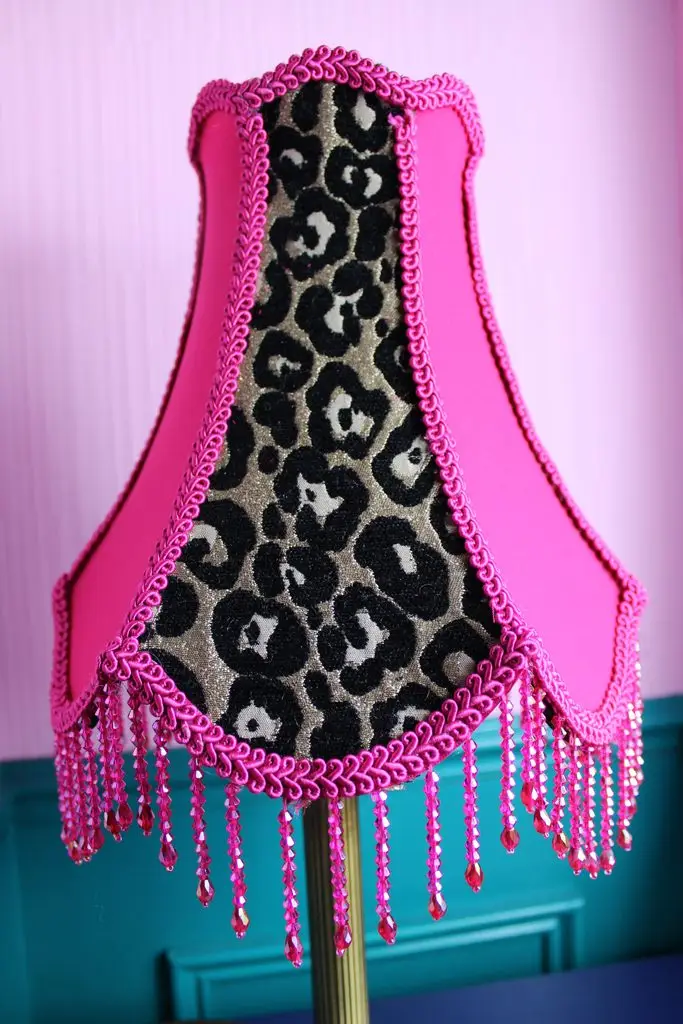
I am addicted to lampshade making, and yes, it may sound odd but it really is possible. I am living proof, although in my defence it all started as a way to reduce the waste in my sewing studio.
The first rule of Sewing Club
If you sew, then you know that the first rule of Sewing Club is ‘NEVER throw away your scraps’.
After a few years of running my curtain and soft furnishing business my scrap stash was huge. Add to that the scraps from my dressmaking hobby and it was becoming a little bit unmanageable. I had to find a good use for it before it forced us to move home!
It’ll come as no surprise that my social media feed is just lots of makers making things and that’s where I discovered soft shade making. I thought it would be a great way to turn my fabric scraps into something beautiful and functional. So, of course, I bought a book.
Wrapping a lampshade frame
At the risk of showing my age, I bought a book because that’s how I approach everything.
I had a thrifted lampshade to rip apart and bought some twill tape to rewrap the frame and set to work.
It turns out wrapping a three dimensional frame is a little more difficult than it looks. That first wrap took me hours. It’s such a finicky process.
There are two insights I can share about frame wrapping i) it gets easier with time and practice and ii) for every length of frame, you’ll need around 2.2 to 2.5 times the length of twill tape. Wrapping with shorter lengths is much easier than trying to pass a 10-metre roll around a shade with lots of spokes.
The first stitch
The first stitch was a b*&ch and it came directly after the worst part of the whole project – pinning the fabric to the frame. (Honestly, there are voodoo dolls with less pinprick injuries. )
On my first project, a fetching pink and leopard print scallop, I used Streetly stitch. A three-part stitch using a single thread to create a zig-zag, where the final part of the stitch acts as a locking stitch. In the USA, makers tend to favour a double strand of thread and exclude the locking stitch. It can certainly be a quicker way to construct a shade but I don’t find it suitable for all textiles.
These days I use both stitches, testing which one works best on the textile I’m using. The key to soft shade construction is a drum-tight panel with no ripples or pulls. Achieving this really varies across fabric types, with silks, tulles and chiffons the most difficult to work with (shock!).
The first blister
When I first started making shades I got blisters. There’s a lot of sewing involved. Even though I’d had plenty of hand-sewing experience it didn’t take me long to realise I was learning a completely new skill. So, with the first shade came the first blister but I persevered.
Thankfully my days of blisters are behind me. My thumb is tougher and I’ve discovered the merits of a good thumb guard if things are getting dicey.
The first shade
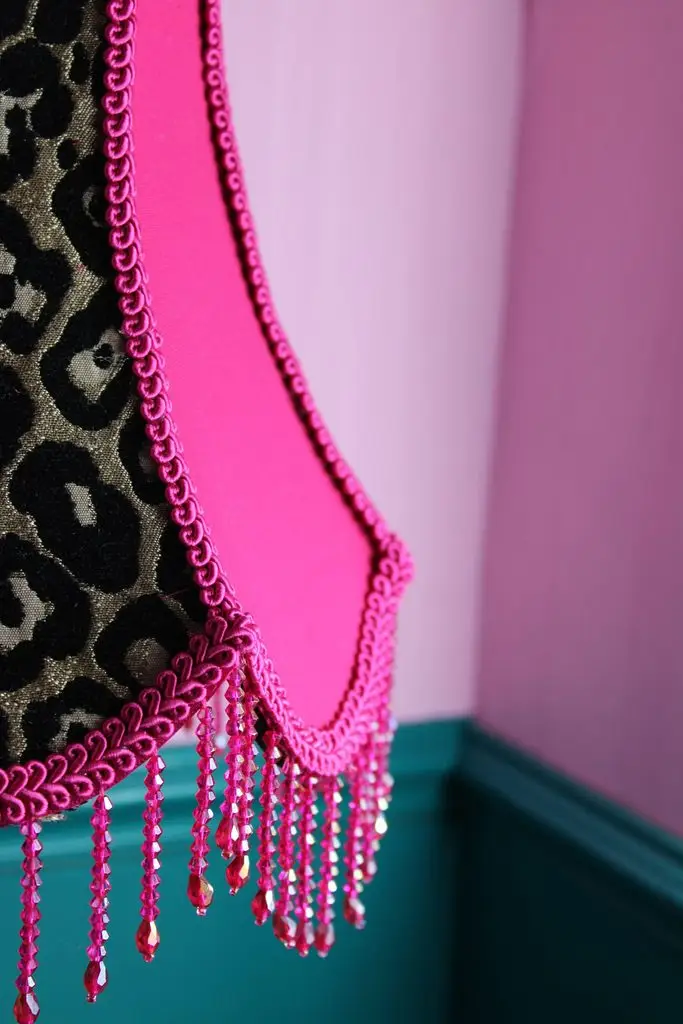
Before the first reveal I got to choose trims! I headed down to Fabric Bazaar, my local fabric and haberdashery in Glasgow and choose some gimp braids and gorgeous glass fringe to complete the shade.
When everything came together I knew immediately that there was no turning back. I was addicted. If only it ended there, but it turns out lampshade making is a gateway drug and I’m hooked on all of it.
If you’d like to be here for all of it too – sign up to our newsletter and I’ll share my adventures straight to your inbox!